
Computational fluid dynamics (CFD) services
Flow, wave, noise and drag studies for ships, offshore platforms, subsea systems and renewable energy devices, so you can check and improve a design before it is built or changed.
- Ships, hulls and propellers
- Floating platforms and vessels
- Subsea pipelines and risers
- Wind turbines and wave energy devices
Each study starts with the question you need answered
Pick the problem closest to yours. We set up the model, the cases and the outputs around it.
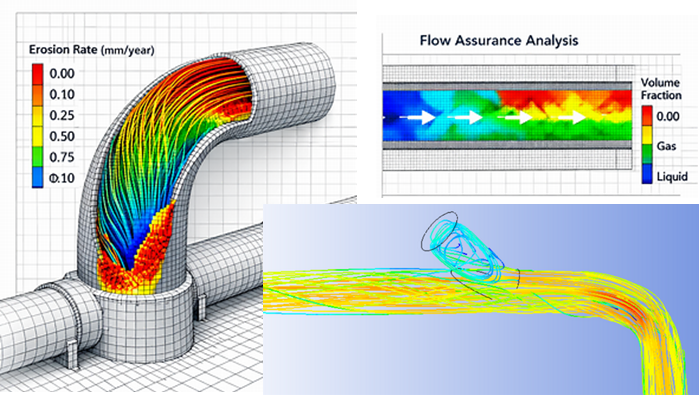
Will this line slug, wax or form hydrates?
We model pressure, velocity and temperature through pipelines and subsea components to show where multiphase flow problems will start.
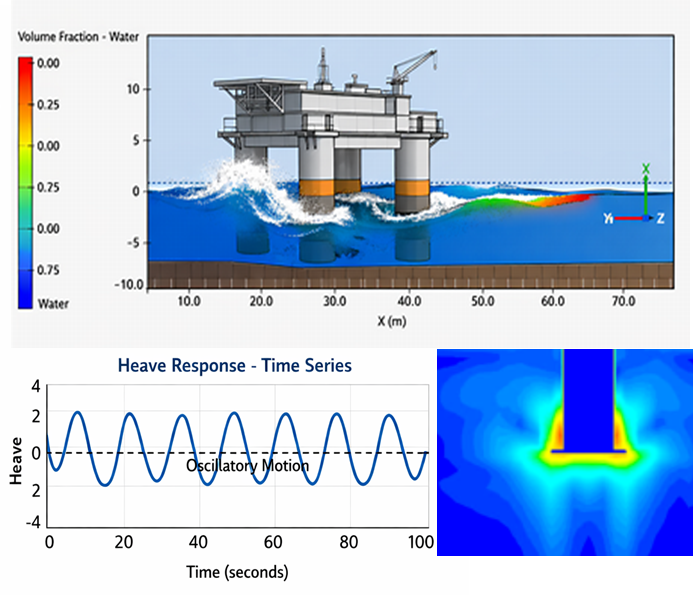
What loads and motions will this structure see in this sea?
Numerical wave tank simulations of floating platforms, vessels and wind turbines, in regular and irregular seas.
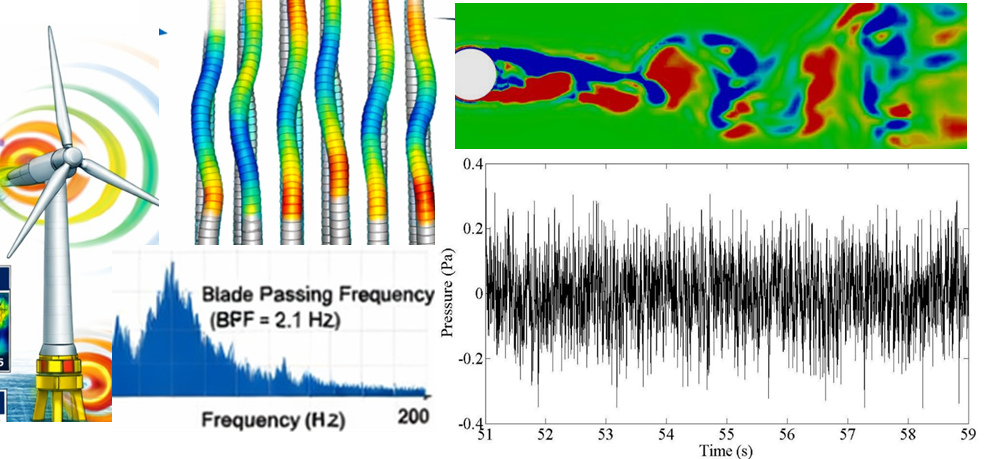
Where are the noise and vibration coming from?
We trace cavitation and wake noise on hulls and propellers, and vortex-driven vibration around risers and pipelines, for crew comfort, structural integrity and environmental compliance.
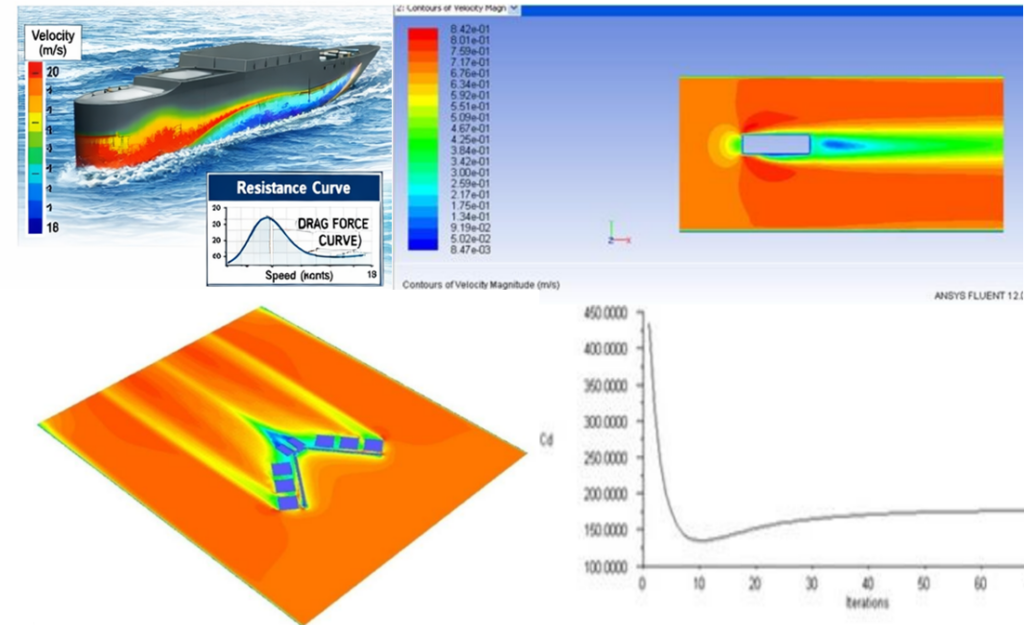
How much resistance is there, and how can it be reduced?
We estimate viscous and pressure drag on hulls and offshore structures, to guide the design towards lower resistance and better stability.
CFD results that go straight into the next analysis
We also do structural, mooring, riser and ship design work, so the loads from a CFD study don't need handing to another firm.
- 1
The CFD study
Flow, waves, noise or drag
Flow assuranceWave-structure interactionFlow-induced noiseDrag estimation - 2
The results
Numbers an engineer can use
Wave loadsMotion responsesDrag valuesPressure and temperature fields - 3
Our other analyses
Taken straight into the next model
From your geometry to a clear answer
- 1
Share the geometry and the question
CAD model or drawings, the operating conditions, and what you need to decide.
- 2
Agree cases and outputs
The flow rates, speeds or sea states to run, and the results you need from each.
- 3
Build the model
Geometry clean-up, a mesh refined where the flow matters, and the boundary conditions.
- 4
Run and check
We run the cases and check the results have converged before anything is reported.
- 5
Report and recommend
Contour plots, the numbers you asked for, and design changes where they help.
What to send us, and what you receive
What to send us
- GeometryCAD model or drawings of the hull, structure or component
- Operating conditionsFlow rates, speeds, pressures and temperatures
- EnvironmentWaves, current and wind at the site
- The questionWhat you need to decide, so we run the right cases
What you receive
Want to see the format first? Ask for a sample CFD study and we'll send one. Email us
What engineers ask us about CFD
What CFD services do you offer?
Four: subsea flow assurance, wave-structure interaction, flow-induced noise and drag estimation, for ships, offshore structures, subsea systems and renewable energy devices.
What can CFD tell me about flow assurance?
It shows where multiphase flow problems such as slugging, hydrate formation, wax deposition and erosion are likely, by modelling pressure, velocity and temperature through pipelines and subsea components.
Can you model my structure in waves?
Yes. We use numerical wave tank simulations to predict wave loads and motion responses of floating platforms, vessels and wind turbines in regular and irregular seas.
What do you need from us to start?
The geometry as a CAD model or drawings, the operating and environmental conditions, and the question you need answered.
Can CFD results go into structural or mooring analysis?
Yes. Because we also do structural, mooring and riser analysis, loads and drag values from a CFD study can go straight into those models with one team.
Can I see an example of your CFD work?
Yes. Email info@aryatech.net and ask for a sample CFD study.
Need to know how the flow will behave?
Send us the geometry and the question. An engineer will come back with the cases to run and a scope.